
Discovery Protocols for Legitimate Free OnlyFans Accounts
OnlyFans does not offer a native search feed, so finding a free page means building your own discovery process. The platform hosts millions of creator accounts but gives subscribers no directory, no category browser, and no recommendation engine. That gap is the reason third-party ranking sites, community threads, and social cross-checks exist at all. This guide lays out a repeatable protocol: how to source candidate pages, how to verify them across multiple channels, and how to track what you find. BestOnlyFans and similar tools appear here as one node in that chain, not as a single authority you should trust blindly.

There is no dashboard explaining how one page ranks against thousands of others, which is exactly why external verification matters. BestOnlyFans refreshes its rankings every month.
Why OnlyFans Discovery Requires External Workarounds
There is no built-in discovery feed, no search directory, and no algorithmic recommendation surface. You arrive with a username already in hand, or you do not arrive at all.
A zero-dollar subscription generates no direct revenue, so a creator has no financial reason to promote it inside a system that offers no promotion channel anyway. Free pages grow almost entirely through off-platform traffic: social posts, community mentions, and listings on aggregator sites.
The information asymmetry runs in one direction. Subscribers see almost none of that. Verification therefore has to be reconstructed from external signals, and the quality of your sources determines the quality of your decisions.

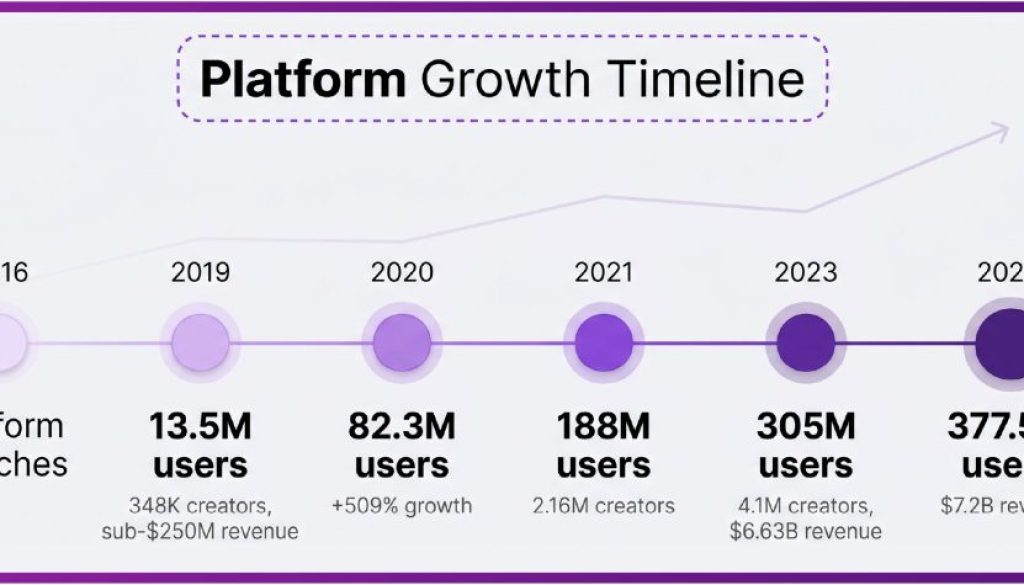
The 2020 surge in signups made this worse in one sense and better in another. More creators meant more legitimate free pages, but also more impersonation accounts capitalizing on the confusion. A structured discovery protocol filters both.
Social Channel Cross-Referencing Techniques
The core principle is identity continuity. A legitimate creator typically maintains the same handle, visual branding, and posting voice across several platforms. When those elements match, the probability that you are looking at a genuine free page rises sharply.
Each channel offers a different kind of evidence, and no single one is sufficient on its own.
- Twitter/X: check that the bio link points to the OnlyFans page and that posting cadence is consistent over months, not days.
- Reddit: search niche communities for mentions of the handle; verified creators are often discussed by subscribers who can confirm activity history.
- Instagram: test the boundary — a link in bio without explicit promotional language is common, since the platform restricts adult content promotion.
- Personal websites: check domain age and SSL validity; a site registered weeks ago with thin content is a weaker signal than one with years of history.
- TikTok: look for indirect references, such as a link tree in bio or repeated handle mentions in comments rather than direct promotion.
Three or more, with consistent posting history stretching back before the OnlyFans account appeared, is a strong signal. One platform alone proves very little.
Ranking Site Integration into Discovery Workflows
Ranking sites aggregate free page listings, categorize by niche, and sometimes track price changes over time.
The useful part is the metadata underneath: when the listing was last updated, whether price history is shown, and what activity signals the site claims to measure.
- Query the ranking site using category and price filters, and note which pages are listed as free.
- Cross-reference the card’s price history against the creator’s claimed tenure on the platform.
- Check the card timestamp against known platform changes, such as fee or feature updates.
- Verify that any activity metric is plausible relative to the creator’s visible audience size.
- Record data gaps or anomalies rather than dismissing them, since patterns emerge across multiple pages.

The platform takes a flat 20% fee on everything, and the creator keeps 80%. Free pages earn nothing on the base subscription, so their revenue comes from pay-per-view messages, tips, and paid chat.
A practical example of how this fits a workflow: if you want to preview a creator’s content before committing to a paid tier, services such as an onlyfans free viewer online tool can help you assess publicly available material, though you should still verify the underlying account through the cross-referencing steps above.
| Signal Type | What It Indicates | Confidence Level |
|---|---|---|
| Price history depth | Longer records suggest the listing has been tracked through real changes rather than scraped once. | Medium to high |
| Activity timestamp recency | Recent updates suggest ongoing monitoring rather than abandoned data. | Medium |
| Estimated engagement proxy | Rough indicator of audience size; useful only in comparison with other pages. | Low to medium |
| Content volume signal | Counts of posts or media items; a proxy for consistency, not quality. | Low |
| Category placement stability | A page that keeps its category over months is less likely to be miscategorized bait. | Medium |
When we audit these listings for our own credibility thresholds, a data source that cannot explain where its numbers come from should be treated as unverified rather than reliable.
Verifying Free Page Authenticity Before Signup
The goal is to separate pages that behave like real creator accounts from pages engineered to harvest attention or payment details.
- Consistent username or handle across three or more platforms, with matching visual branding.
- Regular posting history that predates the OnlyFans presence by months or years.
- Engagement ratios within normal bounds for the audience size shown.
- Visible content samples that match the niche the page claims to cover.
- Platform-native payment processing only, with no requests for direct transfers elsewhere.
Red flags are the inverse. A handle that exists only on one platform, an account created recently with no history, or any request to pay outside the platform’s own billing system should end your evaluation immediately.
Warning: no legitimate free page will ever ask you to send money through a payment app, gift card, or direct bank transfer. Off-platform payment requests are the single most common sign of a fraudulent account.
For context on how these schemes operate more broadly, the mechanics of phishing attacks follow the same pattern: impersonation, urgency, and a payment channel outside the legitimate system.
Community Intelligence and Crowdsourced Verification
Subscriber communities on Reddit, Discord, and niche forums often maintain their own informal records of which free pages are genuine. These threads are useful, but they carry known limitations that you should account for before acting.
The main problem is sample bias. People post when something goes wrong far more often than when a subscription works as expected. A page with three scam accusations and ten thousand satisfied followers may look worse than it is, while a page with no mentions at all may simply have a small audience.
Weight collective reports more heavily than individual claims, and look for corroboration across time rather than reacting to one loud post.

Safe Signup Sequences for Newly Discovered Free Pages
The goal is to observe behavior before any money moves, including small temporary holds.
- Screenshot or note the discovery source and the exact URL you intend to follow.
- Search the handle on a secondary platform to confirm the account still exists and is active.
- Prepare a dedicated payment instrument rather than your primary card.
- Initiate the follow at the zero-dollar tier, since free pages are set to $0.
- Observe the $0.10 card verification hold and confirm it is refunded within a few days.
- Monitor the first 72 hours of message frequency and tone before engaging further.
- Document actual behavior against what the listing and community reports predicted.
Comparing predicted versus observed behavior is what turns a one-off signup into usable data for your next discovery cycle.

If a page later moves to paid tiers, remember that base prices run from $4.99 to $49.99, with most paid subscriptions clustering between $5 and $10. Promotional first months can dip below $4.99, but the base price cannot.
Maintaining Ongoing Legitimacy Monitoring
Verification is not a one-time event.
- Cross-platform posting continuity: is the creator still active where they were active before?
- PPV frequency against the initial pattern you recorded at signup.
- Price change alerts, since a creator raising prices stops auto-renew and existing access lasts only until the paid period ends.
- Message sender consistency: does the tone and style match earlier messages?
- Sentiment shifts in fan community mentions over the past month.
PPV messages unlock content up to $50, and paid chat commonly runs $3 to $5 per message. Tips can reach $100. If a free page suddenly pushes high-frequency paid chat within days of your follow, that is a behavioral change worth logging.

Documenting and Organizing Your Free Page Sources
If you follow more than a handful of free pages, memory stops being a reliable record and you start repeating verification work you already did.
| Field | Purpose | Update Frequency |
|---|---|---|
| Source URL | Records exactly where the page was discovered. | On discovery |
| Discovery date | Establishes how long you have observed the account. | On discovery |
| Verification method used | Notes which cross-references confirmed identity. | On verification |
| Cross-reference platforms checked | Lists the channels reviewed and their results. | On verification |
| Initial behavior notes | Baseline for spotting later changes. | First week |
| Price change log | Tracks tier changes and auto-renew effects. | Monthly |
| Follow or unfollow decision date | Closes the loop on each evaluation. | On decision |
Keep the table local and private. A tracking system is only useful if it does not become a security liability itself. Over time, your own table becomes more valuable than any single ranking site, because it reflects verified behavior you observed directly rather than aggregated claims you cannot audit.
FAQ
How can I tell if a free OnlyFans account is the real creator and not a copycat?
Check identity continuity across platforms. The same handle, visual branding, and posting voice appearing on three or more channels, with history predating the OnlyFans account, is the strongest practical signal. A page with no off-platform footprint at all deserves extra scrutiny before you follow it.
What information does BestOnlyFans provide that OnlyFans itself does not?
Aggregated listings, category filters, and sometimes price history, none of which exist natively on the platform. Treat these listings as candidate sources and confirm identity through your own cross-referencing.
Are Reddit community recommendations reliable for finding free pages?
They are useful but biased. People report problems more often than smooth experiences, so a small number of complaints can distort the picture. Weight repeated reports across months and multiple accounts more heavily than isolated posts, and verify independently before acting.
What should I document after first discovering a new free OnlyFans creator?
Record the source URL, discovery date, verification method, platforms checked, and initial behavior notes. That baseline is what lets you detect meaningful changes later rather than guessing from memory.